
The Egyptians are believed to be among the first to recognize a dog’s potential and domesticate it. A ‘pet cemetery’ recently discovered in Egypt contains remains of dogs with cats, and monkeys. Though the number of dogs in the cemetery was few compared to cats, it shows that the Ancient Egyptians were already getting attached to the animal. In fact, there were pet dogs that were mummified when they died to be buried alongside their owners.
Egyptians may also be the first ones to have ‘leashed’ their dogs, as an ancient wall painting from c. 3500 BCE shows a man walking a dog on a leash.
The Egyptian God of the Dead, Anubis, is depicted by a man’s body and a jackal’s head. Though not dogs, his resemblance to breeds like Basenji and the Mexican breed Xoloitzcuintli is undeniable.
Given below are the 7 types of dogs that have originated in Egypt (or in the surrounding regions).
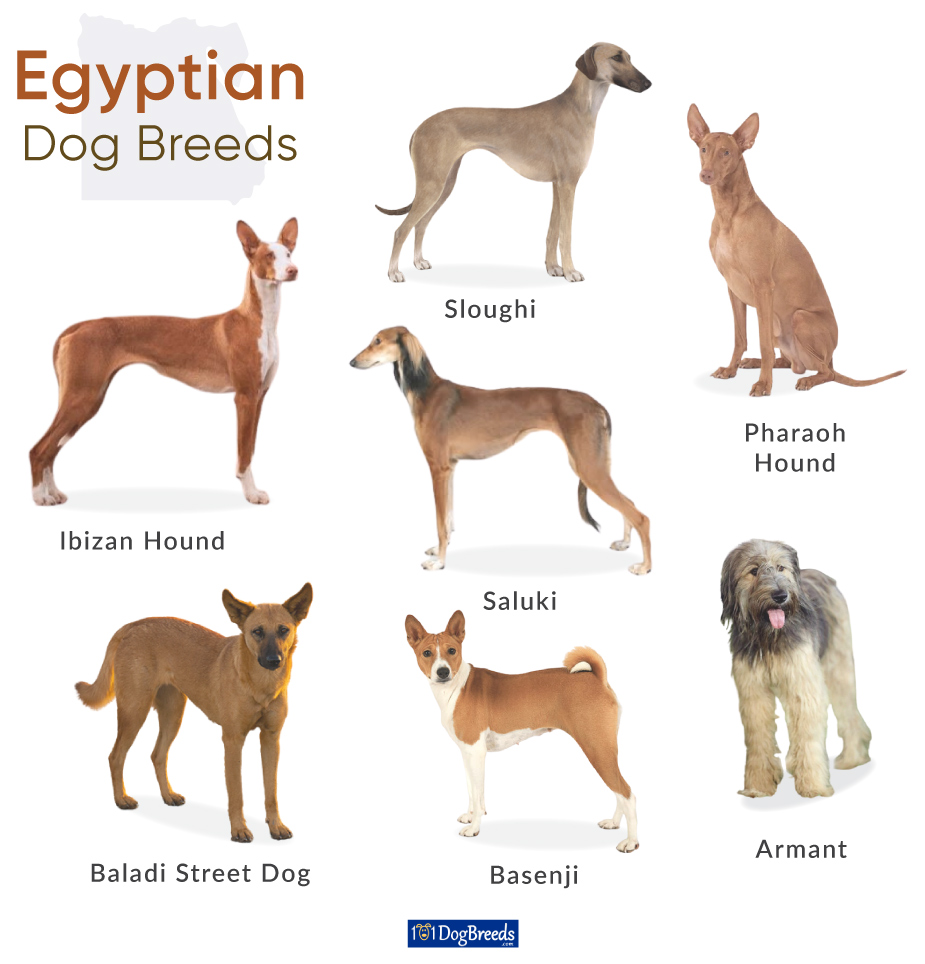
List of Dog Breeds from Egypt
FAQ's
Ancient Egyptians showed affection for their dogs by treating them as valued companions and family members. Archaeological evidence reveals that Egyptians named their dogs, mummified them for the afterlife, and buried them in pet cemeteries. Ancient art also depicts dogs being walked on leashes, indicating a close, domesticated relationship.
The main recognized dog breeds from Egypt and its surrounding regions are primarily ancient sighthound types known for their speed and lean build. This group includes several breeds officially recognized by major kennel clubs, such as: * Saluki* Basenji* Ibizan Hound* Pharaoh Hound
Yes, the Basenji is a unique breed from the Egypt and Central Africa region that is considered "barkless." Due to the distinct shape of its larynx, it cannot produce a traditional bark. Instead, the Basenji communicates through a series of yodel-like sounds, often described as a "barroo."
The Egyptian Baladi is a native landrace dog found throughout Egypt, often living as a street dog. It is not a standardized breed recognized by major kennel clubs like the AKC. Baladi dogs are known for their resilience, intelligence, and varied appearances, having adapted naturally to their environment over centuries.
No, Pharaoh
Hounds do not originate from ancient Egypt despite their name and appearance. Modern DNA studies confirm the breed was developed more recently in Malta from local dog populations. The Egyptian name was applied in the 20th century for marketing purposes, capitalizing on their resemblance to dogs in hieroglyphics.
The Armant, or Egyptian Sheepdog, is not recognized by the American Kennel Club (AKC) primarily due to its rarity and lack of a formalized breed club in the United States. While recognized by the Egyptian Kennel Federation, it has not yet met the stringent population and documentation requirements for AKC acceptance.
Sighthounds like the Saluki were primarily used by Egyptian royalty and nobility for hunting fast-moving prey such as gazelles and hares. Valued for their incredible speed, stamina, and keen vision, these dogs were essential hunting partners in the vast desert landscapes. They were also cherished as noble companions.