
Alaskan Dog Breeds

Alaskan dogs are trademarked by their tapering head, pointy ears, curled tail, muscular build, and water-resistant coats, perfectly suited for the harsh climate. Their hardy and energetic nature made them efficient sled dogs since time immemorial.

Archaeological evidence shows that the Inuit communities in Alaska used dogs to pull sleds across the snowy landscape as early as 1000 AD. Dog sledding still prevails in some rural areas but has evolved more as a sport than a necessity. The Iditarod is a famous sled dog race in Alaska held annually in March.
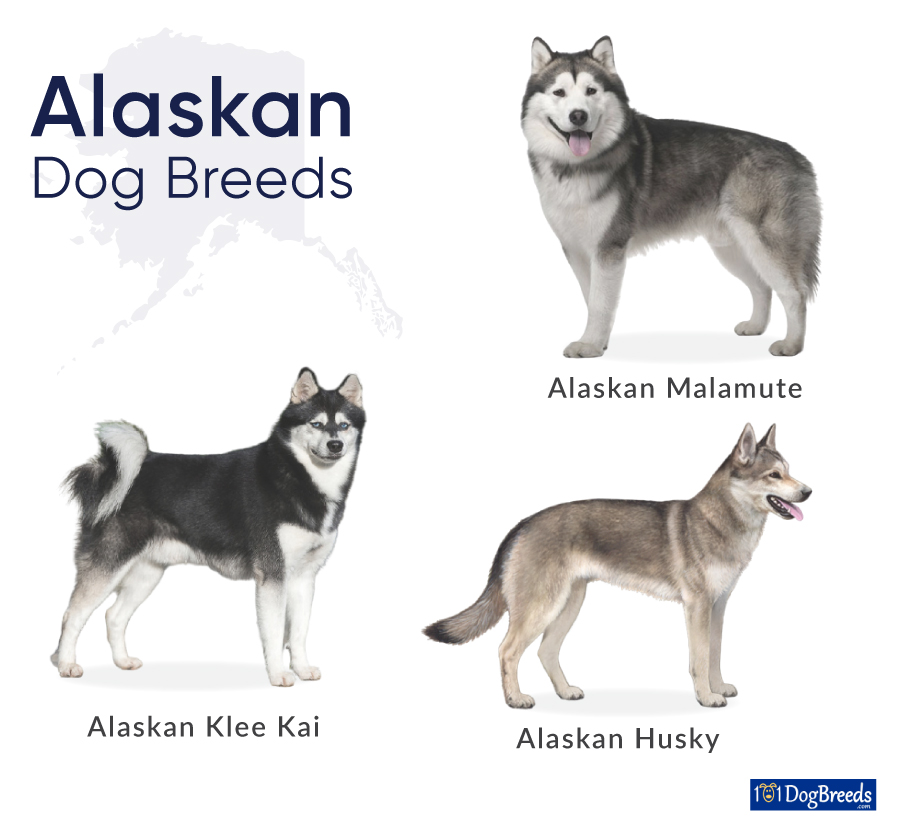
Alaskan Dog Breeds

List of Alaskan Breeds of Dogs

The Alaskan Klee Kai and Alaskan Malamute are recognized by the American Kennel Club (AKC). However, the Alaskan Husky isn’t AKC-recognized; it doesn’t have an official breed standard either. Besides being hardy working dogs, all Alaskan breeds are loving companions. If planning to keep them as pets, do proper research since they have high exercise requirements and cannot thrive in warm weather.

Interesting Facts

  • Contrary to its name, the Alaskan Noble Companion Dog is not from Alaska but an outcome of crossing breeds like the Alaskan Malamute, Alaskan Husky, Labrador Retriever, and German Shepherd.
  • The Alaskan Malamute has been Alaska’s state dog since 2010.

FAQ's

icon

Alaskan dog breeds typically share traits suited for cold climates, including a tapering head, pointy ears, and a curled tail. They possess a muscular build and a thick, water-resistant double coat that provides insulation. These characteristics made them efficient and hardy sled dogs in harsh, snowy environments.

icon

Alaskan dog breeds are generally not suitable for warm climates due to their thick, insulating coats designed for cold weather. They can easily overheat in high temperatures. Furthermore, these energetic working dogs have high exercise requirements that can be challenging to meet safely in a hot environment.

icon

The Alaskan Husky is not recognized by the American Kennel Club (AKC) because it is a crossbreed without an official breed standard. It was developed for its working ability as a sled dog, not for a specific appearance, by mixing breeds like the Alaskan Malamute and Siberian Husky.

icon

Dogs were historically used by Inuit communities in Alaska as essential working animals for transportation. Archaeological evidence suggests that as early as 1000 AD, these dogs were used to pull sleds across the snowy landscape. This was a vital method for travel and hauling goods in the region.

icon

The Alaskan Malamute is the official state dog of Alaska, a title it has held since 2010. This powerful and ancient sled dog breed is recognized for its historical significance, strength, and endurance, which are deeply connected to the state's heritage. It is also recognized by the AKC.

icon

The Alaskan Klee Kai is the smallest of the Alaskan dog breeds. It was developed to be a companion-sized version of a northern-style sled dog, resembling a miniature Alaskan Husky. Unlike its larger counterparts, the Klee Kai was bred specifically for companionship rather than heavy-duty work.

icon

An Alaskan Husky is a crossbreed developed for performance, not a standardized appearance. Its genetic makeup typically includes a mix of several northern breeds to enhance its sled-pulling abilities. Common breeds in its lineage are:* Alaskan Malamute* Siberian Husky* Greenland Dog* Samoyed


Subscribe to our newsletter

Join our subscribers list to get the latest news, and updates delivered directly in your inbox.

Loading